I don’t know whether or not it’s entirely literal. I don’t think so, but I think it does get the vital importance of connection that HxH seems to be trying to convey. Because she isn’t saying suffer so much as instead stay with me.
Kite’s worldview was framed as a bit dodgy in his human life, notably here:
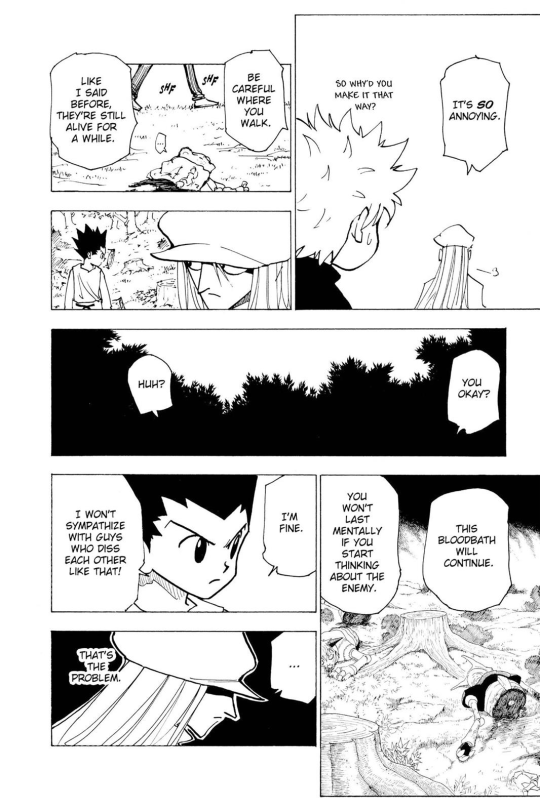
The problem is, of course, a strong fellowship is what dooms the ants and also points out the flaws of the Hunters trying to exterminate them–because there was absolutely no need to do it. It was a futile effort that only brought hurt to both the Hunters and the ants.
At the same time, connection comes with pain. We see that in Killua and Gon’s relationship; as beautiful as it is, it’s also flawed like all relationships, and they suffer for caring about each other. Komugi dies because she connected with Meruem and chose to spend the rest of her life playing Gungi with him, because that connection (which her descriptions of her family tell us she didn’t really have elsewhere) was the most important thing in her life.
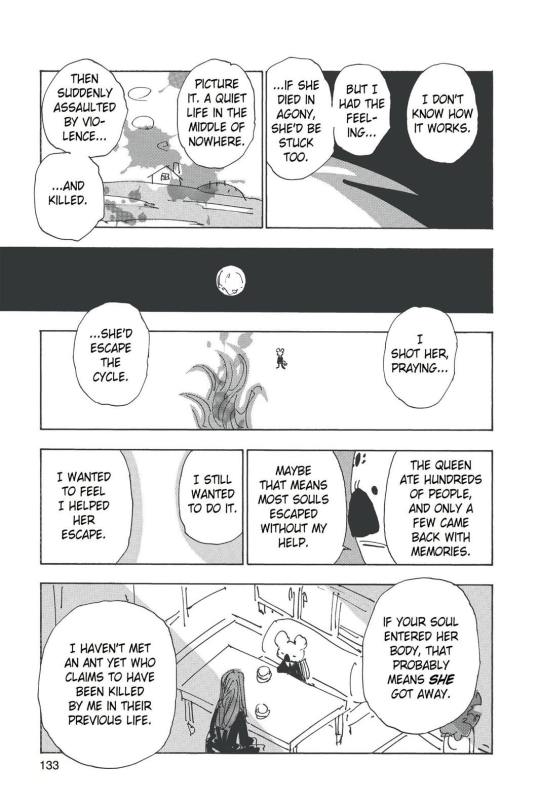
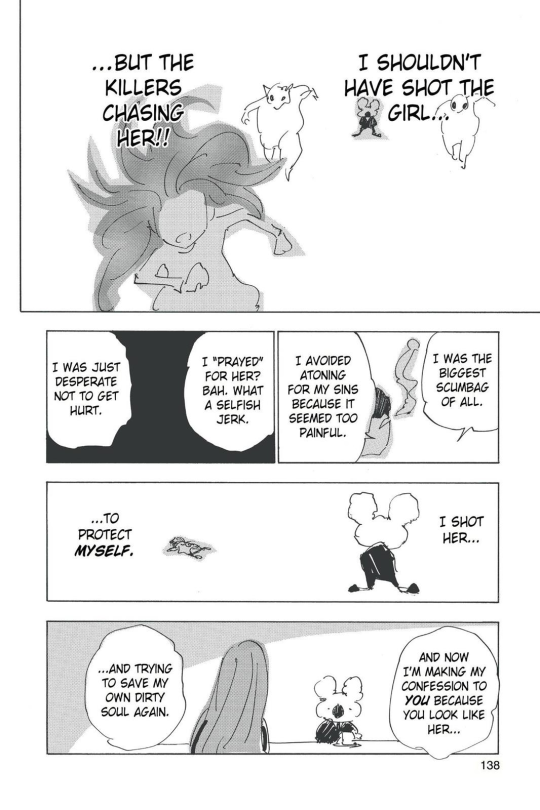
To suffer continually I think would be to repeat this cycle that Koala describes here:
The “I shot her to protect myself” I think gets at the heart of what is going on with Gon when he attacked Pitou, when Kurapika is seeking revenge on the Troupe and going after the eyes, when Illumi is trying to control Killua and Alluka, when Chrollo is stealing, when Hisoka is being Hisoka. It’s about them. They’re seeking to protect their own sense of worth. Gon in fighting, because his father taught him fighting=you can earn the right to meet me. Killua in protecting Gon=I have a purpose and something to do. Kurapika seeking to honor his heritage (where his worth comes from), Illumi in seeking to control the family that abused him, Hisoka in seeking near-death experiences and pleasure, Chrollo in trying to find out who he is (since he currently defines himself by the Spiders).
You can’t ever erase what you’ve done, especially if you’ve taken a life. Which at this point all our characters pretty much have except, like, Leorio. But I think for HxH, redemption is really just genuine connection. I’ve written a bit before about how redemption is different in different stories. Like Meruem and Pitou never showed remorse for the children they killed, but I think most people would consider them kind of redeemed–because they formed genuine connections. Pitou with Meruem, and Meruem with Komugi.
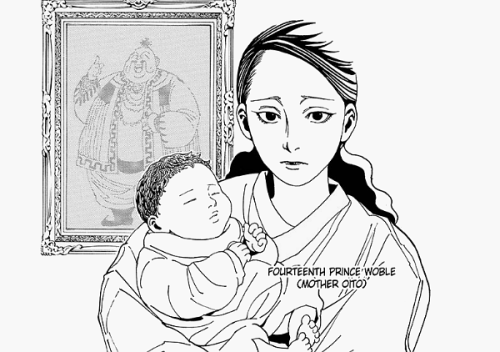
So, should there be any redemption for those characters, it would rely on their ability to make connections. Kurapika’s connections to his friend and to Oito and Woble are likely to save him from his spiral. Chrollo is connected to his troupe, but also equally attached to to his troupe’s ideology, which is why I expect him to choose at some point, and his choice will decide his fate. Illumi’s connection to his family is twisted and obsessive and objectifying in nature but he does have those connections, so it remains to be seen if he can learn how to not objectify his brothers (perhaps through realizing his parents have objectified him, if that were to happen, but that’s me guessing). Hisoka however does not have direct connections, and that’s kind of a calling card of his character… but he is, at this point, kind of connected to Illumi, so we’ll see how this plays out.
(I’m genuinely not worried about any of the narrative six characters dying until like, the very end of the series, and then I have no idea.)
I did the thing where I made a set of HxH teas because it was fun. I’ll be trying them over the next few months… after I finish the teas I already have no i’m not a tea addict hahaha what are you talking about
I’m not going to do every character, but simply the characters I think are most important and/or my favorites. 😛 Also, this is just my opinion and definitely open to debate! MBTI isn’t a science; it’s just a fun tool.
Main Characters:
Gon Freecss: ESFP “The Entertainer”
The biggest challenge ESFPs face is that they are often so focused on immediate pleasures that they neglect the duties and responsibilities that make those luxuries possible. Complex analysis, repetitive tasks, and matching statistics to real consequences are not easy activities for ESFPs. They’d rather rely on luck or opportunity, or simply ask for help from their extensive circle of friends.
Killua Zoldyck: INTJ “The Architect”
It’s lonely at the top… People with the INTJ personality type are imaginative yet decisive, ambitious yet private, amazingly curious, but they do not squander their energy.
Kurapika: ISFJ “The Defender”
ISFJ personalities (especially Turbulent ones) are often meticulous to the point of perfectionism… ISFJs take their responsibilities personally, consistently going above and beyond, doing everything they can to exceed expectations and delight others, at work and at home. ISFJ personalities are a wonderful group, rarely sitting idle while a worthy cause remains unfinished
Leorio Paladiknight: ESFJ “The Consul”
Supportive and outgoing, ESFJs can always be spotted at a party – they’re the ones finding time to chat and laugh with everyone! But their devotion goes further than just breezing through because they have to. ESFJs truly enjoy hearing about their friends’ relationships and activities, remembering little details and always standing ready to talk things out with warmth and sensitivity.
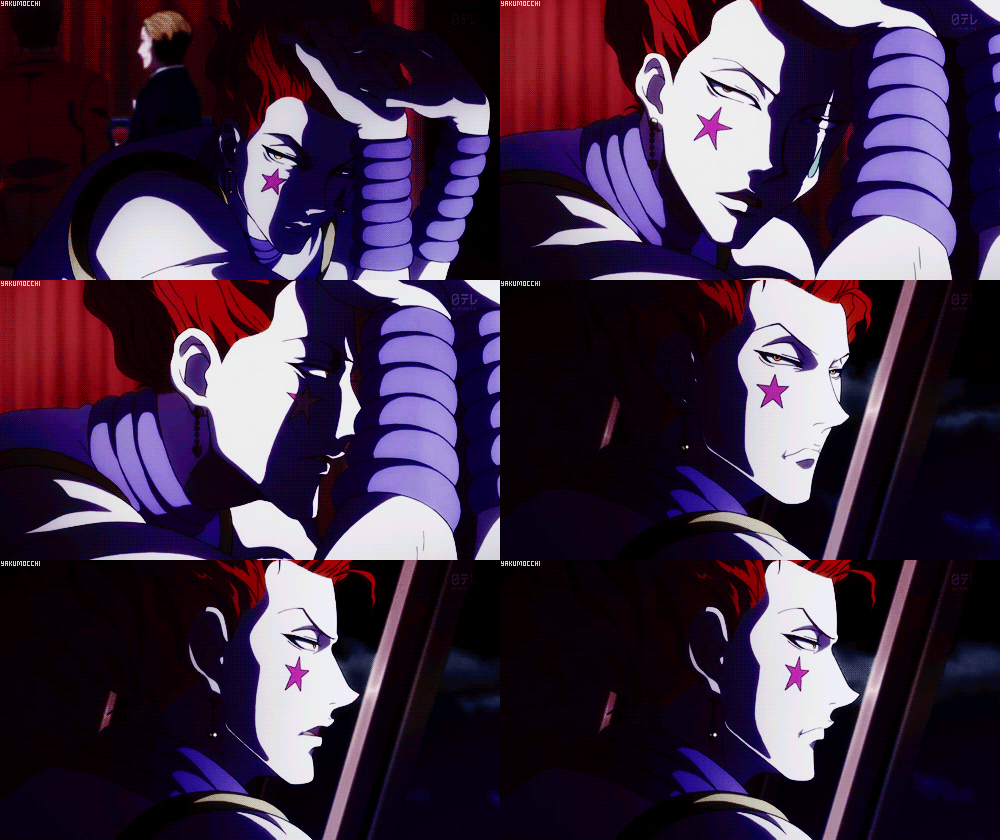
Hisoka Morow: ENTP “The Debater”
The ENTP personality type is the ultimate devil’s advocate, thriving on the process of shredding arguments and beliefs and letting the ribbons drift in the wind for all to see. Unlike their more determined Judging (J) counterparts, ENTPs don’t do this because they are trying to achieve some deeper purpose or strategic goal, but for the simple reason that it’s fun.
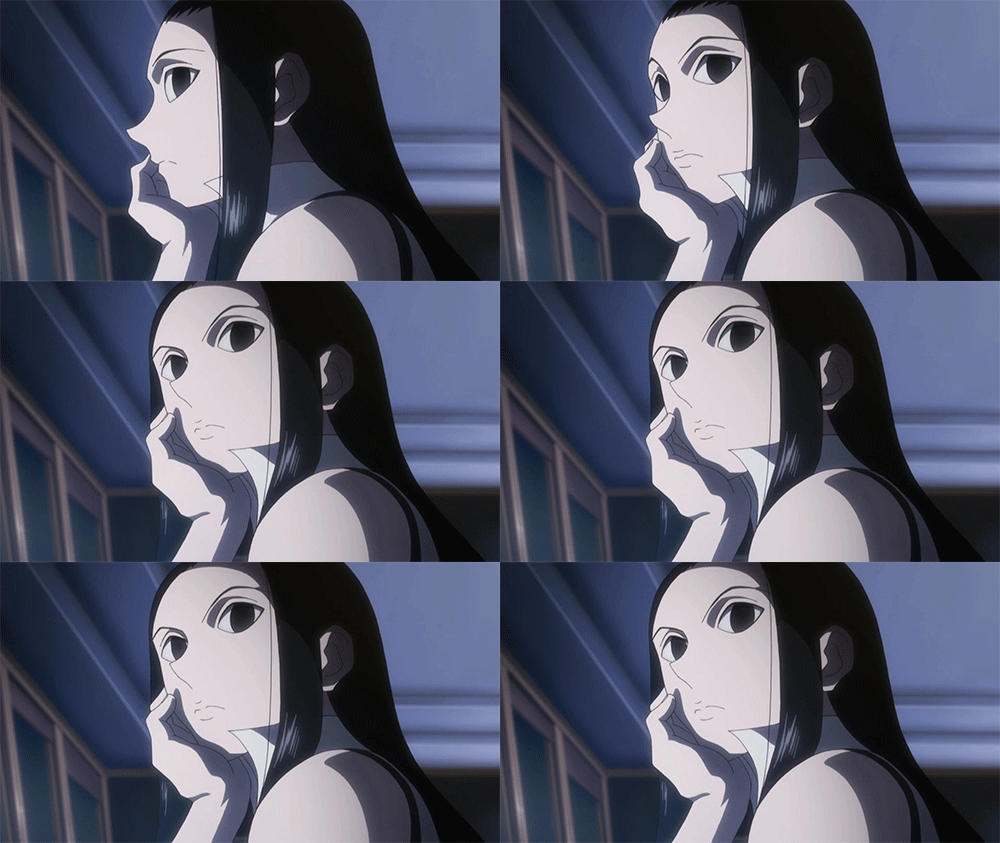
Illumi Zoldyck: ISTJ “The Logistician”
Their defining characteristics of integrity, practical logic and tireless dedication to duty make ISTJs a vital core to many families, as well as organizations that uphold traditions, rules and standards, such as law offices, regulatory bodies and military. People with the ISTJ personality type enjoy taking responsibility for their actions, and take pride in the work they do – when working towards a goal, ISTJs hold back none of their time and energy completing each relevant task with accuracy and patience..Dependency on others is often seen by ISTJs as a weakness, and their passion for duty, dependability and impeccable personal integrity forbid falling into such a trap… their blunt approach leaves others with the false impression that ISTJs are cold, or even robotic. People with this type may struggle to express emotion or affection outwardly, but the suggestion that they don’t feel, or worse have no personality at all, is deeply hurtful.
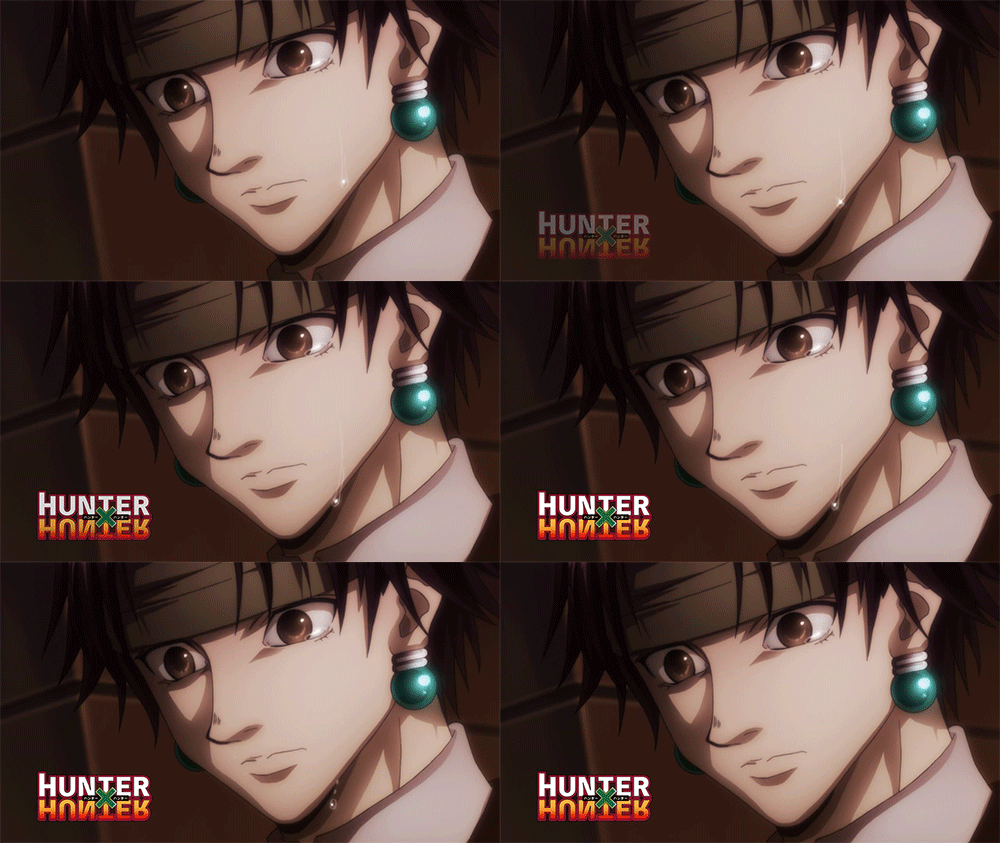
Chrollo Lucilfer: INTJ “The Architect”
He’s a confusing one because I kept going back and forth on the F or T function. But I lean T.
While this may be intended as an insult by their peers, they more than likely identify with it and are even proud of it, greatly enjoying their broad and deep body of knowledge. INTJs enjoy sharing what they know as well, confident in their mastery of their chosen subjects, but owing to their Intuitive (N) and Judging (J) traits, they prefer to design and execute a brilliant plan within their field rather than share opinions on “uninteresting” distractions like gossip… A paradox to most observers, INTJs are able to live by glaring contradictions that nonetheless make perfect sense – at least from a purely rational perspective. For example, INTJs are simultaneously the most starry-eyed idealists and the bitterest of cynics, a seemingly impossible conflict.
Dumpster Fire The Zoldyck Family
Alluka: ESFJ “The Consul”
ESFJs love to be of service, enjoying any role that allows them to participate in a meaningful way, so long as they know that they are valued and appreciated.
Milluki Zoldyck: ISTP, “The Virtuoso”
While their mechanical tendencies can make them appear simple at a glance, ISTPs are actually quite enigmatic. Friendly but very private, calm but suddenly spontaneous, extremely curious but unable to stay focused on formal studies, ISTP personalities can be a challenge to predict, even by their friends and loved ones. ISTPs can seem very loyal and steady for a while, but they tend to build up a store of impulsive energy that explodes without warning, taking their interests in bold new directions.
Kalluto Zoldyck: ISFJ “The Defender”
I went back and forth on whether he was an ISTJ or ISFJ but decided on F thanks to that one brief snippet we had into Kalluto’s mind and how he desired to help Feitan whereas the other PT members did not.
ISFJ personalities (especially Turbulent ones) are often meticulous to the point of perfectionism, and though they procrastinate, they can always be relied on to get the job done on time.
The Phantom Troupe (or my faves there)
Machi: INTP “The Logician”
Further, with Thinking (T) as one of their governing traits, INTPs are unlikely to understand emotional complaints at all, and their friends won’t find a bedrock of emotional support in them. People with the INTP personality type would much rather make a series of logical suggestions for how to resolve the underlying issue, a perspective that is not always welcomed by their Feeling (F) companions… INTP personalities are so prone to reassessing their own thoughts and theories, worrying that they’ve missed some critical piece of the puzzle, that they can stagnate, lost in an intangible world where their thoughts are never truly applied.
Feitan: ISTJ “The Logistician”
ISTJ personalities are no-nonsense, and when they’ve made a decision, they will relay the facts necessary to achieve their goal, expecting others to grasp the situation immediately and take action. ISTJs have little tolerance for indecisiveness, but lose patience even more quickly if their chosen course is challenged with impractical theories, especially if they ignore key details – if challenges becomes time-consuming debates, ISTJs can become noticeably angry as deadlines tick nearer.
Phinks: ESTJ “The Executive”
ESTJs are aware of their surroundings and live in a world of clear, verifiable facts – the surety of their knowledge means that even against heavy resistance, they stick to their principles and push an unclouded vision of what is and is not acceptable… However, ESTJs don’t work alone, and they expect their reliability and work ethic to be reciprocated – people with this personality type meet their promises, and if partners or subordinates jeopardize them through incompetence or laziness, or worse still, dishonesty, they do not hesitate to show their wrath.
Pakunoda: ISFJ “The Defender”
ISFJs utilize excellent memories not to retain data and trivia, but to remember people, and details about their lives.
Shizuku: INTP “The Logician”
Usually known as the philosopher, the architect, or the dreamy professor… They may appear to drift about in an unending daydream, but INTPs’ thought process is unceasing, and their minds buzz with ideas from the moment they wake up. This constant thinking can have the effect of making them look pensive and detached,
Uvogin: ESTP “The Entrepreneur”
If ESTPs aren’t careful though, they may get too caught in the moment, take things too far, and run roughshod over more sensitive people, or forget to take care of their own health and safety… ESTPs are full of passion and energy, complemented by a rational, if sometimes distracted, mind. Inspiring, convincing and colorful, they are natural group leaders, pulling everyone along the path less traveled, bringing life and excitement everywhere they go. Putting these qualities to a constructive and rewarding end is ESTPs’ true challenge.
Shalnark: ENTP, “The Debater”
ENTPs only make up about three percent of the population, which is just right, as it lets them create original ideas, then step back to let more numerous and fastidious personalities handle the logistics of implementation and maintenance.
Nobunaga: ESFP “The Entertainer”
[T]here’s no greater joy for ESFP personalities than to bring everyone else along for the ride. ESFPs can chat for hours, sometimes about anything but the topic they meant to talk about, and share their loved ones’ emotions through good times and bad.
Chimera Ants:
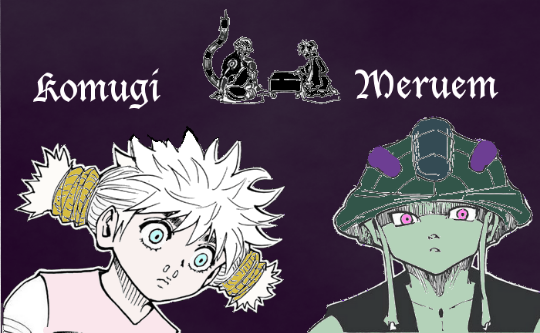
Meruem: ISTJ “The Logistician”
[P]eople with the ISTJ personality type often prefer to work alone, or at least have their authority clearly established by hierarchy, where they can set and achieve their goals without debate or worry over other’s reliability.ISTJs have sharp, fact-based minds, and prefer autonomy and self-sufficiency to reliance on someone or something.
Komugi: ISTP “The Virtuoso”
ISTPs love to explore with their hands and their eyes, touching and examining the world around them with cool rationalism and spirited curiosity… ISTPs explore ideas through creating, troubleshooting, trial and error and first-hand experience. … ISTPs enjoy lending a hand and sharing their experience, especially with the people they care about… ISTP personalities can be a challenge to predict, even by their friends and loved ones.
Pitou: ESFJ “The Consul”
ESFJs are the cheerleaders and the quarterbacks, setting the tone, taking the spotlight and leading their teams forward to victory and fame… ESFJs continue to enjoy supporting their friends and loved ones, organizing social gatherings and doing their best to make sure everyone is happy.
Shaiapouf: ISTJ “The Logistician”
People with the ISTJ personality type enjoy taking responsibility for their actions, and take pride in the work they do – when working towards a goal, ISTJs hold back none of their time and energy completing each relevant task with accuracy and patience… ISTJs tend to keep their opinions to themselves and let the facts do the talking, but it can be a long time before observable evidence tells the whole story.ISTJs need to remember to take care of themselves – their stubborn dedication to stability and efficiency can compromise those goals in the long term as others lean ever-harder on them, creating an emotional strain that can go unexpressed for years, only finally coming out after it’s too late to fix. If they can find coworkers and spouses who genuinely appreciate and complement their qualities, who enjoy the brightness, clarity and dependability that they offer, ISTJs will find that their stabilizing role is a tremendously satisfying one, knowing that they are part of a system that works.
Palm Siberia: ISFJ “The Defender”
ISFJs utilize excellent memories not to retain data and trivia, but to remember people, and details about their lives.
Kurapika’s Side Character Buds
Senritsu/Melody: “The Advocate”
INFJs indeed share a unique combination of traits: though soft-spoken, they have very strong opinions and will fight tirelessly for an idea they believe in. They are decisive and strong-willed, but will rarely use that energy for personal gain – INFJs will act with creativity, imagination, conviction and sensitivity not to create advantage, but to create balance. Egalitarianism and karma are very attractive ideas to INFJs, and they tend to believe that nothing would help the world so much as using love and compassion to soften the hearts of tyrants.
Oito Hui Guo Rou: ESFJ “The Consul”
Moral of this: Why Oito should take over the Kakin Empire and make it a matriarchy.
ESFJs are more concerned with fashion and their appearance, their social status and the standings of other people. Practical matters and gossip are their bread and butter, but ESFJs do their best to use their powers for good. ESFJs are altruists, and they take seriously their responsibility to help and to do the right thing.
I am happy you liked my meta and thank you very much for this ask!
So we could say that Kaneki and Meruem have very similar arcs structure-wise.
They
both start their story entering a new phase of their lives. To be
precise Meruem is born and Kaneki becomes a ghoul which is framed as
some sort of new birth since Ken himself associates Rize to a maternal
figure:
Meruem and Komugi are defined as opposite extremes of the evolutive scale.
Meruem is considered since birth as the pinnacle of evolution by both his mother and the Royal Guards:
Komugi on the other hand is introduced as a physically weak and even blind girl who at first sight doesn’t seem particularly brilliant:
This point is important because the Chimera Ant arc among other things can be seen as an arc about evolution and what exactly this word means. Does it mean to become stronger and stronger like Gon who in this arc turns into an adult? Or maybe there is a different kind of growth a person should pursue? And is this growth necessarily functional to the survival of the species? Is the species all what the individual is for?
Meruem and Komugi are two characters who help addressing this question and give us an answer.



















 hamliet